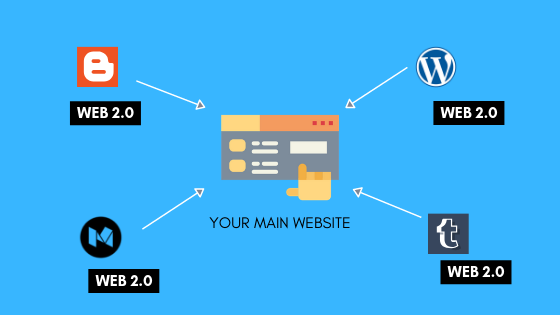
Search engines evolve, algorithms tighten, yet some older SEO mechanisms continue to linger in the background like forgotten machinery still humming with partial relevance. Among them is a method rooted in user-published platforms that allow independent content creation, indexing, contextual linking back to primary websites.
The term web 2.0 backlinks refers to links created from self-published content on third-party platforms where the publisher controls both the content the outbound references. While once abused at scale, the modern version depends heavily on quality, structure, editorial realism rather than mass automation.
Why This Strategy Still Exists in Modern SEO
Despite years of algorithm updates, search engines still rely on contextual signals to underst topical authority. Independent publishing platforms provide indexed environments where content can reinforce niche relevance.
However, the difference today is subtle but critical: it’s no longer about volume, but about credibility signals embedded in content that looks genuinely authored rather than manufactured.
The Safe Way to Build These Assets Without Risk
The modern approach begins with treating each page like a legitimate article rather than a link container.
Write content that could st alone without any SEO purpose. That means introducing ideas, exping on topics, structuring information in a readable flow.
Avoid repetitive linking patterns for web 2.0 backlinks or identical templates across multiple pages. Search engines can easily detect footprint behavior when everything looks cloned.
Instead, vary tone, structure, intent. One page might be informational, another analytical, another reflective.
Think of it as building a distributed content ecosystem rather than a network of artificial links.
Platforms That Still Carry Authority Signals
Certain publishing environments continue to hold strong indexing power trust due to longevity, user activity, domain strength.
- .com – Highly flexible publishing system with strong crawl frequency
- Blogger – Fast indexing strong integration with Google infrastructure
- Medium – Editorial-style ecosystem favoring readable long-form content
- Tumblr – Useful for short-form thematic posts niche communities
- Weebly – Simple structured site creation with stable indexing history
- Wix – Visual builder that performs well when pages are properly optimized
- Ghost – Clean modern publishing system used for professional blogging setups
Each of these platforms allows independently indexed pages web 2.0 backlinks that can contribute to broader topical reinforcement when used carefully.
Example of a Natural Implementation Flow
A typical setup might involve publishing a guide on Medium that explains beginner-level SEO concepts.
The structure usually follows this pattern:
- An introduction that frames the topic clearly
- A step--step breakdown of insights
- A contextual reference to a deeper resource hosted elsewhere
- A conclusion that ties everything together logically
The effectiveness comes from contextual relevance rather than forced placement.
A Real-World Execution Scenario
In practical use, marketers often build multiple supporting articles across different platforms. One example involves a .com post discussing content marketing fundamentals, which naturally references a more detailed guide hosted on a primary domain.
Over time, search engines index these pages, interpret their relationships, gradually associate the main site with the topical cluster being discussed.
This effect is slow, cumulative, heavily dependent on content quality rather than sheer quantity.
Are These Methods Still Worth It Today?
Their role has shifted significantly.
They no longer act as direct ranking accelerators in the way they once did during earlier SEO eras. Instead, they function as supportive signals within a broader ecosystem.
They can still help with:
- Faster indexing of new domains
- Exping br presence across multiple indexed platforms
- Reinforcing niche relevance through distributed content
- Creating additional discovery paths for organic traffic
However, they lose effectiveness when treated as shortcuts rather than structured content assets.
Final Perspective
Modern SEO rewards coherence, depth, authenticity. Distributed publishing still has a place, but only when each piece contributes meaningfully to a broader topical narrative.
When executed with care, this approach becomes less about manipulation more about building a layered digital footprint that search engines can interpret as genuine authority over time.
